 11
11
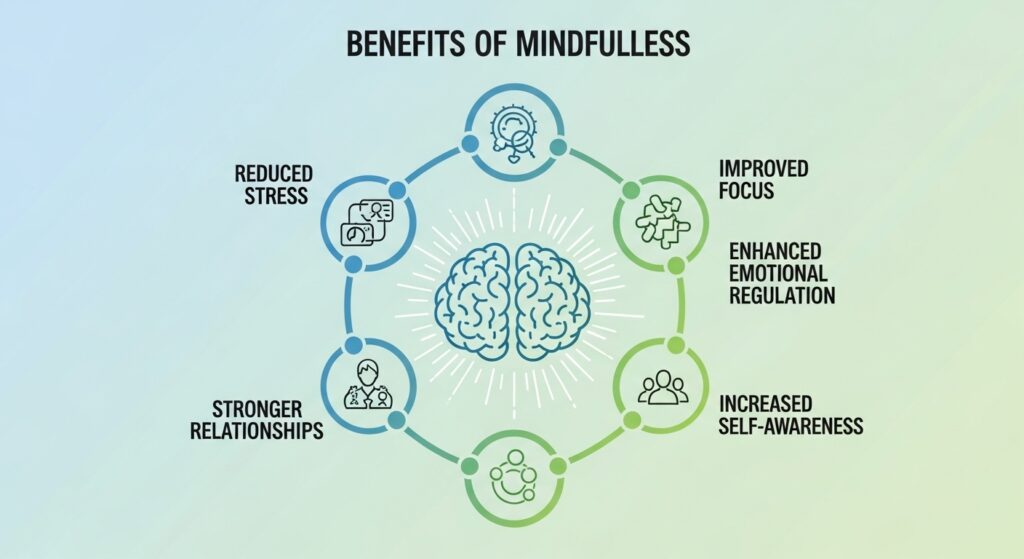
Mindfulness has become one of the most popular wellness practices in the world—and for good reason. More people are turning to mindfulness to reduce stress, improve focus, and lead more meaningful lives. Whether you are a busy professional, a student juggling responsibilities, a parent managing daily tasks, or someone simply trying to find balance, mindfulness can make a powerful difference.
But what exactly is mindfulness? Why do doctors, therapists, and wellness experts strongly recommend it? And how can practicing mindfulness improve your mental, emotional, and even physical health?
This complete guide explores all major benefits of mindfulness, backed by research and real-life applications. By the end of this article, you’ll understand why mindfulness is more than a trend—it is a lifestyle that supports long-term wellbeing.
Mindfulness is the practice of paying attention to the present moment without judgment. It means becoming aware of your thoughts, feelings, body sensations, and surroundings as they happen.
In simpler words:
You can practice mindfulness while sitting, walking, eating, breathing, or doing simple tasks. It does not require any special tools, location, or equipment. This makes mindfulness a simple but powerful everyday habit.
One of the most well-known benefits of mindfulness is its ability to lower stress. In today’s world, constant work pressure, social expectations, and digital distractions increase anxiety levels. Mindfulness helps break this cycle by calming the mind.
People who practice mindfulness report feeling:
Even just a few minutes of mindful breathing daily can significantly reduce anxiety symptoms.
In a world full of notifications and distractions, staying focused has become harder than ever. Mindfulness trains your brain to stay on one task at a time.
This makes mindfulness extremely helpful for anyone struggling with distraction or attention issues.
Mindfulness helps you become more aware of your emotions, which allows you to respond thoughtfully instead of reacting impulsively.
Often, negative emotions like anger, frustration, or sadness take over without us realizing it. Mindfulness gives you space to observe emotions instead of being controlled by them.
People who practice mindfulness regularly often feel calmer, more stable, and more balanced emotionally.
Mindfulness is widely used in psychology and therapy because of its strong mental health benefits. Mindfulness-based therapy is commonly recommended for people experiencing depression, anxiety, or emotional difficulties.
By developing awareness of thoughts, mindfulness helps break harmful thought cycles that lead to mental distress.
When your mind is cluttered, it becomes harder to think clearly. Mindfulness gives your brain space to process new ideas.
Many successful entrepreneurs, writers, and artists practice mindfulness to improve creativity and clarity.
Mindfulness doesn’t just help you understand yourself—it also improves your relationships with others.
When you are fully present with the people around you, your relationships naturally become healthier and more meaningful.
Mindfulness teaches you to observe your thoughts and actions without judgment. This boosts self-awareness, which is essential for personal growth.
Self-awareness is the first step toward positive change, and mindfulness makes this process easier and more natural.
Millions of people struggle with poor sleep due to stress, overthinking, or irregular routines. Mindfulness is a natural solution that improves sleep quality without the need for medication.
Practicing mindful breathing or meditation for a few minutes before sleep can significantly improve sleep patterns.
Mindfulness helps you become more aware of your habits—both good and bad. This awareness makes it easier to form healthier routines.
When you are mindful, you make choices based on awareness instead of impulse, helping you build a healthier lifestyle.
Mindfulness helps you notice the small moments in life—things we often take for granted.
People who regularly practice mindfulness often report greater overall happiness and satisfaction with life.
Mindfulness is not just good for your mind—it also benefits your body.
By reducing stress and promoting relaxation, mindfulness positively affects many body systems.
Many chronic pain patients use mindfulness to reduce discomfort. Mindfulness doesn’t eliminate pain, but it helps you change the way you think and feel about it.
This makes mindfulness especially useful for people with long-term pain conditions.
Mindfulness helps you become more aware of your body—your posture, breathing, tension, and energy. This deeper connection improves overall wellbeing.
When your mind and body work together, you experience more balance and harmony in daily life.
Mindfulness doesn’t have to be complicated. Here are easy techniques you can start today:
Sit comfortably and focus on your breath. Breathe slowly and observe each inhale and exhale.
Close your eyes and mentally scan your body from head to toe, noticing tension or relaxation.
Walk slowly and pay attention to each step, the ground beneath your feet, and your surroundings.
Eat slowly, savor each bite, and notice the flavors and textures of your food.
Choose an object—like a flower, cloud, or tree—and study it fully for a few moments.
Listen fully when someone speaks without planning your reply.
Write your thoughts without judgment, focusing on the present moment.
Even small, consistent efforts lead to powerful long-term benefits.
Mindfulness is more than a relaxation technique—it is a lifestyle shift that improves mental, emotional, and physical wellbeing. From reducing stress and anxiety to boosting focus, creativity, relationships, and self-awareness, mindfulness has benefits that touch every part of life.
And the best part?
You don’t need long hours or complicated methods. Just a few minutes of mindful awareness each day can change how you think, feel, and live.
Whether you want to improve your health, increase happiness, manage stress, or find peace within yourself, mindfulness is a powerful tool to help you get there.