 11
11Mindfulness is more than just a buzzword — it is a life skill that can completely transform the way you think, feel, and experience the world. In a time when our attention is constantly pulled in different directions by notifications, deadlines, and daily stress, mindfulness gives us the gift of stillness. It allows us to pause, breathe, and fully engage with what’s happening right now.
The concept might seem simple, but its impact on mental, physical, and emotional well-being is profound. By practicing mindfulness, you can experience less stress, improved focus, deeper emotional balance, and even better physical health. In this article, we’ll explore the meaning of mindfulness, its scientifically proven benefits, practical exercises, real-life examples, and tips for making it part of your daily routine.
Mindfulness means being fully present in the moment, aware of your thoughts, feelings, bodily sensations, and surroundings without judgment. It is about accepting each experience as it comes, whether pleasant or unpleasant, without trying to suppress or change it.
Mindfulness doesn’t require you to sit in silence for hours; it can be practiced anytime — while walking, eating, working, or even brushing your teeth. The key is to direct your attention to the present moment and gently guide it back whenever it wanders.
Historically, mindfulness has roots in ancient Buddhist traditions, but today it is widely recognized in modern psychology. Therapies like Mindfulness-Based Stress Reduction (MBSR) and Mindfulness-Based Cognitive Therapy (MBCT) use it to treat anxiety, depression, and chronic stress.
Example: Imagine drinking a cup of tea. Instead of scrolling on your phone or thinking about tomorrow’s to-do list, you focus on the warmth of the cup, the aroma of the tea leaves, and the taste with every sip. That’s mindfulness in action.
Scientific research has shown that mindfulness changes how the brain processes emotions and stress. Brain scans reveal that regular mindfulness practice can:
A 2014 study in JAMA Internal Medicine found that mindfulness meditation programs can improve anxiety, depression, and pain levels. Another Harvard study showed that mindfulness changes brain structure in as little as eight weeks.
These findings prove that mindfulness is not just a feel-good trend; it has measurable, long-term benefits for the mind and body.
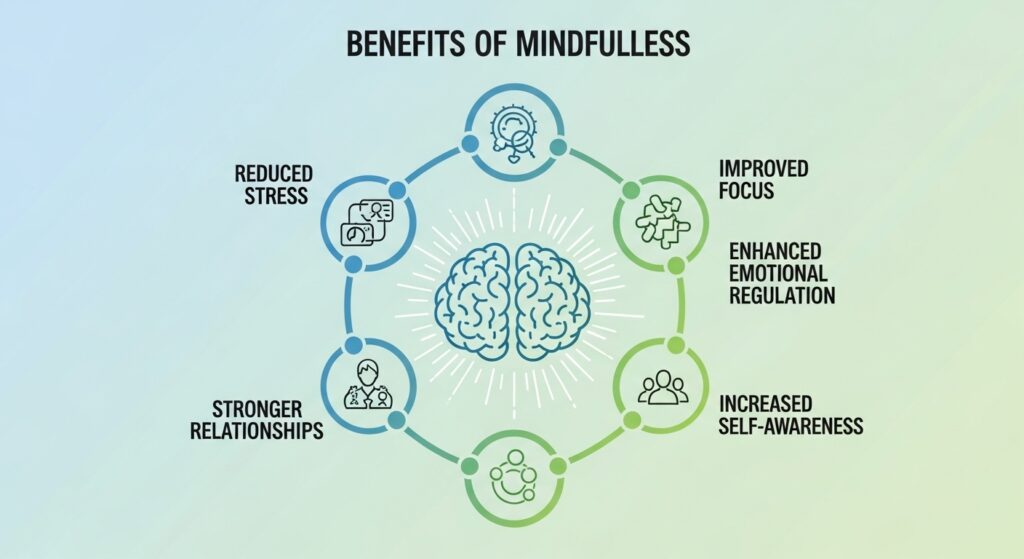
The benefits of mindfulness extend to nearly every aspect of life.
Example: A mindful parent can be fully present with their child during playtime, which strengthens the bond and creates positive memories.
You don’t need hours of free time to practice mindfulness. These exercises can be done in a few minutes:
Tip: Even a 5-minute mindful walk during lunch can refresh your mind.
Mindfulness is most powerful when woven into everyday routines.
Example: Instead of rushing through laundry, notice the texture of fabrics and the smell of clean clothes.
Life is unpredictable, and challenges are inevitable. Mindfulness strengthens emotional resilience — the ability to adapt and recover from difficulties. By observing thoughts and emotions without judgment, you avoid being overwhelmed by them.
For example, if you receive criticism at work, mindfulness helps you pause, reflect, and respond constructively rather than reacting defensively.

Starting mindfulness can be tricky. Here’s how to deal with common problems:
Creating a consistent routine ensures mindfulness becomes second nature.
Mindfulness benefits everyone, but certain groups may find it especially valuable:
In today’s digital world, our phones, computers, and smart devices often dominate our attention. While technology has many benefits, it can also be one of the biggest distractions from living mindfully. The constant stream of notifications, emails, and social media updates can pull us away from the present moment, making us feel scattered and restless.
Mindfulness can help us use technology in a healthier way. One technique is digital mindfulness, which involves being intentional about when and how you use your devices. For example, before checking your phone, pause and take a deep breath, asking yourself if this is the right moment to engage.
You can also schedule specific “tech-free” periods during the day, such as during meals or the first hour after waking up. Turning off unnecessary notifications can prevent constant interruptions and help you focus on your current activity.
Mindful technology use is not about avoiding devices completely but about using them in a way that serves your goals instead of distracting from them. By practicing digital mindfulness, you can reduce stress, improve focus, and create more space for real-world interactions.
This balance between the digital and physical worlds is essential for mental clarity and emotional well-being in the modern age.
Life is not always smooth; we all face challenges such as job loss, illness, or relationship struggles. During these moments, mindfulness becomes a powerful tool for emotional stability. Instead of getting lost in worries about the future or regrets about the past, mindfulness teaches us to focus on what is happening right now.
This doesn’t mean ignoring problems, but rather facing them with a calm and balanced mind. For example, if you are dealing with uncertainty, take time to breathe deeply and observe your thoughts without judgment. This pause allows you to respond thoughtfully instead of reacting out of fear or frustration.
Mindfulness can also help you find small moments of peace even in the middle of chaos, such as appreciating the sound of rain or the warmth of a comforting drink. These mindful moments act as anchors that keep you grounded.
Over time, this practice builds resilience, allowing you to move through difficulties with greater strength. Many therapists use mindfulness-based strategies to help clients cope with grief, anxiety, and life transitions. By staying present during tough times, you gain clarity to make better decisions and maintain hope for the future.
Mindfulness is no longer limited to meditation circles or spiritual communities — it is now part of schools, workplaces, and even healthcare systems worldwide. As scientific research continues to prove its benefits, more people are adopting mindfulness practices to improve their quality of life.
Companies are introducing mindfulness training to reduce employee stress and boost productivity. Schools are teaching children how to focus and regulate emotions through breathing exercises. Hospitals are using mindfulness programs to help patients manage chronic pain and recover from illnesses.
The rise of mindfulness apps and online resources has also made the practice more accessible than ever. Looking ahead, mindfulness may become a core skill taught alongside reading and writing, helping future generations develop emotional intelligence and mental resilience.
However, as mindfulness becomes more popular, it’s important to preserve its true essence — living with awareness and compassion — rather than treating it as just another trend. Whether practiced for stress relief, better health, or personal growth, mindfulness will continue to be a powerful tool for navigating the challenges of modern life. Its timeless wisdom combined with modern science ensures that it will remain relevant for years to come.
Mindfulness is a practical, accessible tool that can enrich your life in countless ways. It doesn’t require expensive equipment, special skills, or a lot of time — just the willingness to be present.
Start small. Maybe today you’ll take three mindful breaths before opening your emails. Tomorrow, you might enjoy your lunch without distractions. Over time, these moments will add up to a calmer, healthier, and more fulfilling life.
Read More: